
I have a larger head, a round face and fuller cheeks, so I’m always on the lookout for sunglasses for a round face. And for years buying sunglasses went the same way. The pair looked great on the display stand. Then I put them on, and either the arms pressed into the sides of my head or the bottom of the frame sat right on the apples of my cheeks. So I spent the rest of the day pushing them back up my nose.
If that sounds familiar, shape is only half the story. Fit matters just as much, and a lot of sunglasses advice skips it completely.
This guide is about finding sunglasses for a wide face that actually fit. You’ll learn how to read the numbers printed on every frame, how to keep sunglasses off your cheeks, and what an optician can fix in a few minutes. I also included the quick checks I now do before buying any pair.
If you want the shape advice first, my post on how to choose sunglasses for your face shape covers which frames suit round faces. This post picks up where that one ends: getting those frames to sit right.
Why Standard Sunglasses Feel Too Small on a Wide Face
Most sunglasses are made in one standard size, and that size is built for an average-width face. So if your face is wider, or your head is larger overall, you’re working against the frame from the start.
Here’s what usually happens. The frame is narrower than your face, so the arms splay outward to get around your head. That puts pressure on your temples, and the pressure pushes the frame forward and down your nose. As a result, you get a headache after an hour and sunglasses that keep sliding.
Full cheeks add a second problem. Many fashion sunglasses are made from acetate (the thick, glossy plastic) with a molded bridge and no nose pads. In other words, the frame sits wherever the shape of your nose puts it. If your nose bridge is on the lower side and your cheeks are full, the bottom of the frame lands right on your cheekbones.
That’s why the pair that looks perfect on the model looks odd on you. The model’s face is simply giving the frame more room.
How to Read Sunglasses Measurements for a Wide Face
Every pair of sunglasses has three numbers printed on the inside of one arm. They look something like this: 54□18-145. Once you know what they mean, shopping online gets much easier.
Lens width (the first number). This is the width of one lens in millimeters. For a wide face, a lens width of 55mm or more is a good starting point. Smaller than that, and the frame often ends before your face does.
Bridge width (the middle number). This is the space between the lenses, where the frame rests on your nose. A wider bridge sits a little lower on the nose, while a narrower one sits higher. So if frames always touch your cheeks, a slightly narrower bridge can help (as long as it doesn’t pinch).
Temple length (the last number). This is the length of the arm, from the hinge to the tip behind your ear. Standard arms are usually around 135 to 140mm. If you have a larger head, look for 145mm or longer so the arms reach behind your ears comfortably instead of pulling the frame back.
How to find your own numbers
The easiest way is to check a pair of glasses or sunglasses you already own that fits well. Look inside the arm, write down the numbers, and use them as your baseline.
If you don’t have a pair that fits, measure your face instead. Hold a ruler or soft measuring tape across your face at eye level, from temple to temple. Then look for frames with a total frame width that matches this measurement or goes a few millimeters past it. Many online shops list total frame width in the product details. If they don’t, you can estimate it: add two lens widths plus the bridge, then add about 10mm for the hinges and rims.
How to Keep Sunglasses From Touching Your Cheeks
This was the part that changed things for me. Once I knew why frames sat on my cheeks, I could look for features that fixed it.
Look for adjustable nose pads
Frames with nose pads (the small clear pads on little metal arms) sit higher on your face. Also, the pads can be bent to lift the frame up and forward, which moves the bottom rim away from your cheeks. Metal frames almost always have them, and some acetate styles do too.
Try low bridge fit frames
Some brands, including Warby Parker, sell frames labeled low bridge fit. These have a built-up bridge and slightly different nose pad placement, so the frame sits higher on your face. They were designed for people with a lower nose bridge or higher cheekbones, but they also work well if your cheeks are on the fuller side.
Choose shallower lenses
Lens height is the measurement from the top of the lens to the bottom. Big, deep oversized lenses are the most likely to hit your cheeks, simply because there’s more frame hanging below your eyes. So if your oversized pairs always touch, try a lens height around 45mm or less. You can still go wide, just not as deep.
Skip heavy wraparound styles
Wraparound sunglasses curve around your face, which means they sit closer to your skin. That’s useful for sport, but for full cheeks it usually means contact. Flatter frames give your face more breathing room.
Add stick-on nose pads to frames you already love
If you have acetate sunglasses you love but they sit too low, adhesive silicone nose pads are a cheap fix. You stick them on either side of the bridge, and they raise the frame a few millimeters. That small lift is often enough to clear your cheeks.
The Smile Test and Other Quick Fit Checks
Before you buy a pair (or before the return window closes), run through these checks in front of a mirror.
Smile big. If the frame lifts when you smile, it’s resting on your cheeks. This is the single most useful test for full cheeks, so do it every time.
Check the width. The outer edges of the frame should line up with the widest part of your face at the temples, or sit just past it. If your face extends beyond the frame, the pair is too narrow.
Look down at the floor. The sunglasses should stay put. If they slide, the arms are too short, too loose, or the frame is too heavy for the bridge.
Wear them for ten minutes. Then take them off and look for red marks on your temples or behind your ears. Marks mean pressure, and pressure means a headache later.
Blink a few times. Your lashes shouldn’t brush the lenses. If they do, the frame sits too close to your face, which usually also means it’s close to your cheeks.
What an Optician Can Fix in Five Minutes
A lot of sunglasses that almost fit can be adjusted. Many optical shops will do small adjustments for free or for a small fee, especially if you bought the frames there (and it’s worth asking even if you didn’t).
An optician can bend the arms so they curve more comfortably behind your ears. They can also widen the frame slightly so it doesn’t squeeze your temples. For metal frames with nose pads, they can reposition the pads to lift the frame off your cheeks.
They can also reduce the frame’s tilt. Most sunglasses tilt slightly inward at the bottom, which is fine for many faces. However, with full cheeks, that tilt is exactly what makes the bottom rim touch. A small adjustment moves the lower edge away from your face.
Acetate frames can be adjusted too, because opticians warm the plastic before bending it. I wouldn’t try this at home, though. It’s easy to crack a frame or warp a lens.
Best Sunglasses Shapes for a Wide Face and Round Face
Fit and shape work together, so here’s the short version of the shape advice.
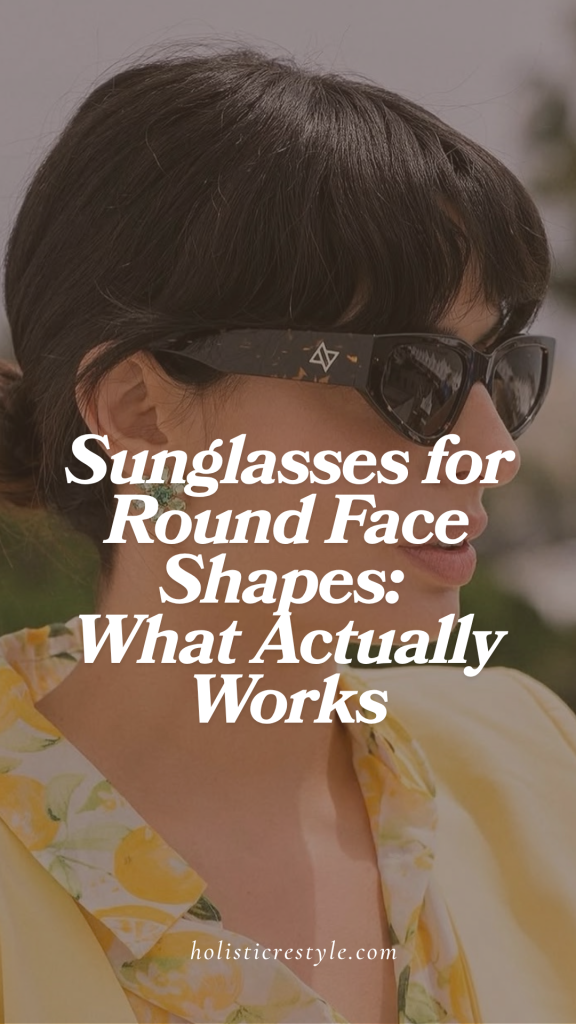
Angular frames balance a round face. Square and rectangle frames add structure, while cat eye frames lift the eye line and draw attention upward and outward. For the full breakdown with examples, read ‘How to Choose Sunglasses for Your Face Shape’.
For a wide face specifically, a few extra things help:
- Go for frames that are wide rather than tall. Width fixes the “too narrow” look, and a shallower lens keeps them off your cheeks.
- Pick lighter frames. Heavy acetate slides more, and sliding sunglasses end up on your cheeks. Thinner acetate or metal frames stay put better.
- Check for multiple sizes. Some classic styles come in more than one size. Ray-Ban, for example, makes several of its best-known styles in larger sizes. The same frame one size up can look completely different on you.
Shopping online with a wide face
Online shopping works well once you know your numbers. Filter by frame width if the site allows it, and always check the measurements in the listing before buying. On Amazon, many listings include lens width and temple length in the product details or photos.
Also, check the return policy before you order. Ordering two sizes of the same frame and returning one is often the fastest way to find your fit.
Finding Sunglasses That Fit Is Easier Than It Looks
Finding sunglasses for a wide face comes down to two things: frames wide enough for your face, and frames that sit high enough to clear your cheeks. Once you know your measurements and run the smile test, you’ll spot the right pair much faster.
So start with the pair of glasses you already own, write down the numbers, and shop from there. For shape ideas that suit a round face, head over to the best sunglasses for a round face.
And save this post to your Pinterest style board, so you have your fit checklist ready next time you’re trying on sunglasses.


